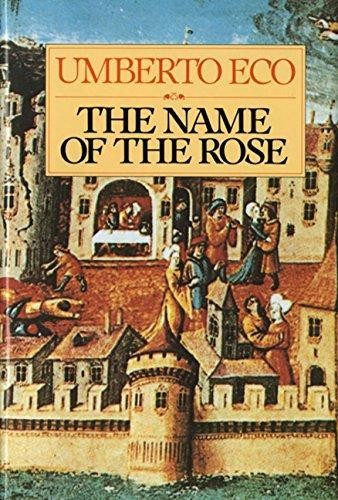
This is a book I read once in my twenties and remembered wrong, I thought it was mostly the murders and the labyrinth, and coming back to it I found out it’s at least as much a Franciscan poverty dispute and a theological argument about whether Christ owned the clothes on his back. William of Baskerville, an English friar doing a Medieval Sherlock Holmes routine complete with the eyeglasses and the scribe named Adso who might as well be Watson with a different name, arrives at an Italian abbey to broker peace between the Pope’s men and the Emperor’s, and instead gets pulled into a string of monk deaths that all seem to be following the trumpets from Revelation.
The library is the real main character here, an actual labyrinth you need a cipher to navigate, guarded because certain books are considered too dangerous for the wrong reader to find. There’s a whole passage midway through about books that speak of other books instead of speaking of the world, a library as a murmuring dialogue between dead authors, and I underlined that one twice, once at twenty something and again now, in a completely different color pen, which felt like its own small joke on me.
The mystery itself resolves cleanly enough, no complaints, Bernard Gui shows up as the inquisitor everyone’s been dreading and is exactly as ruthless as advertised. But I’ll be honest, on this reread I skimmed less of the theological argument than I did the first time, and it turns out that’s where a lot of the actual tension lives, whether the Church can survive not owning anything, whether laughing is a sin, whether comedy itself is dangerous to a certain kind of order. Heavy stuff to smuggle inside a monastery whodunit, and Eco smuggles it in expertly.
Five stars, unreservedly. I suspect I’ll read it a third time in another twenty years and find yet another book hiding inside it.