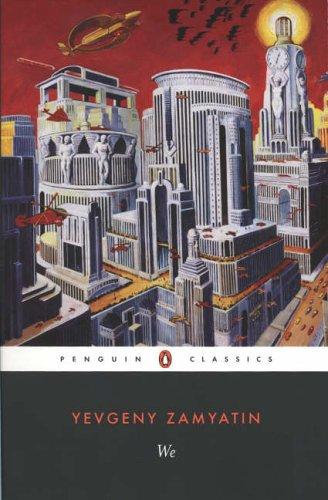
D-503 is a mathematician and an engineer, a number instead of a name, building a ship called the Integral in the glass walled cities of the One State, and this book is technically his diary, though the state would very much like it to be propaganda about how content everyone is. He describes himself early on as incapable of the “melody” other writers manage, only able to reproduce what he sees and thinks, which is a very funny thing for a narrator to say in a book this lyrical, deliberately so I think, since the whole plot is about a rational man discovering he has an irrational side he can’t compute away.
I-330 is that irrational side made into a person, literally described through the book’s own math metaphor as the square root of negative one, a number that has no real, countable form and yet clearly exists. Watching D-503 fall for her against every instinct the State has trained into him, watching him start hiding thoughts instead of reporting them, is the most quietly devastating part of the book, because you know exactly how the One State handles citizens who develop an interior life. I won’t spoil the specific mechanism they use to fix him, but it’s more clinical and more chilling than anything in 1984’s Room 101, precisely because it’s framed as a kindness rather than a punishment.
I read 1984 first, like most people probably do, and coming to We afterward felt like discovering the source code. The total surveillance, the mathematical justification for suppressing the individual, the glass architecture that makes privacy itself the crime, all of it is here first, written in the early 1920s under a censorship regime that Zamyatin was navigating in something close to real time. Orwell reportedly read it before writing 1984, and honestly I now suspect Huxley did too, whatever he claimed publicly.
Five stars. Short, strange, and honestly the tightest of the three big dystopias once you’ve read all of them back to back.