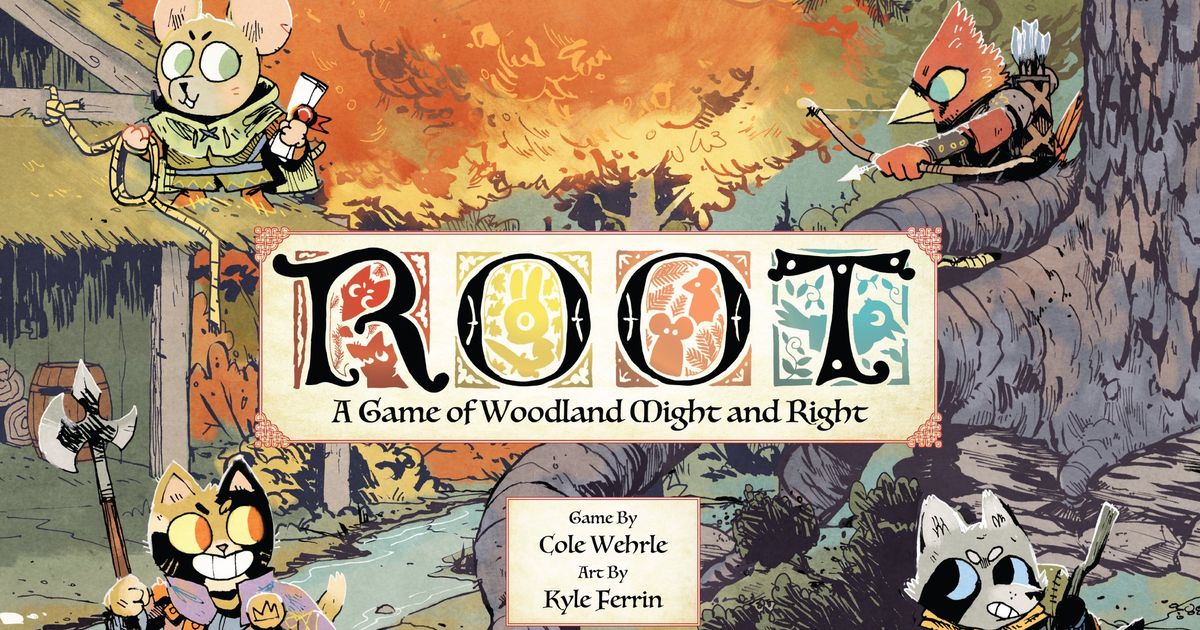
The animals on the box are deceptive in the best way, this is a sharp, occasionally brutal asymmetric war game wearing a children’s book illustration as camouflage. Every faction plays an entirely different game stitched onto the same board, the Marquise de Cat building an industrial engine, the Eyrie locked into a rigid rulebook of decrees that punishes them for changing plans mid stream, the Woodland Alliance building sympathy underground until it erupts, the Vagabond just doing whatever the Vagabond wants while everyone else tries to figure out what that even means for them. At two, Marquise against Vagabond is the matchup I keep coming back to, different enough in rhythm that it never feels like solved chess.
Teaching Root is a genuine investment, the two-book system, a “Law of Root” reference plus a “Learning to Play” walkthrough, actually works better than most rulebooks I’ve fought with, but budget a real session zero regardless, closer to forty minutes than the fifteen the box implies. Setup itself, once you know the faction boards, is fast, under ten minutes, and that matters because this earns repeat plays on a weeknight in a way plenty of similarly deep games don’t. The Eyrie’s rules ratchet, where taking too many similar actions in a row locks you into a decree you can’t legally break, is the single cleverest asymmetric mechanism I’ve hit in this hobby, it turns “the strong faction getting stronger” into its own built in tension instead of a runaway leader problem.
Cost per hour is genuinely excellent here, this is one of the most replayed boxes I own specifically because the asymmetry means play five feels nothing like play one, and every faction combination reshuffles the whole table’s dynamic. I’ve heard the Vast comparisons a lot, and having played both, Root is the tighter, better taught version of the same ambitious idea.
Five stars. This is the game that finally got my regular opponent to admit she likes “weird asymmetric war games” now, which four years ago she’d have laughed at.